Learn how the EU’s new Entry/Exit System (EES) will be rolled out progressively and what it means for travelers entering or leaving the Schengen Area in 2025.
What the “Progressive Start” of the EU Entry/Exit System (EES) Means for Travelers

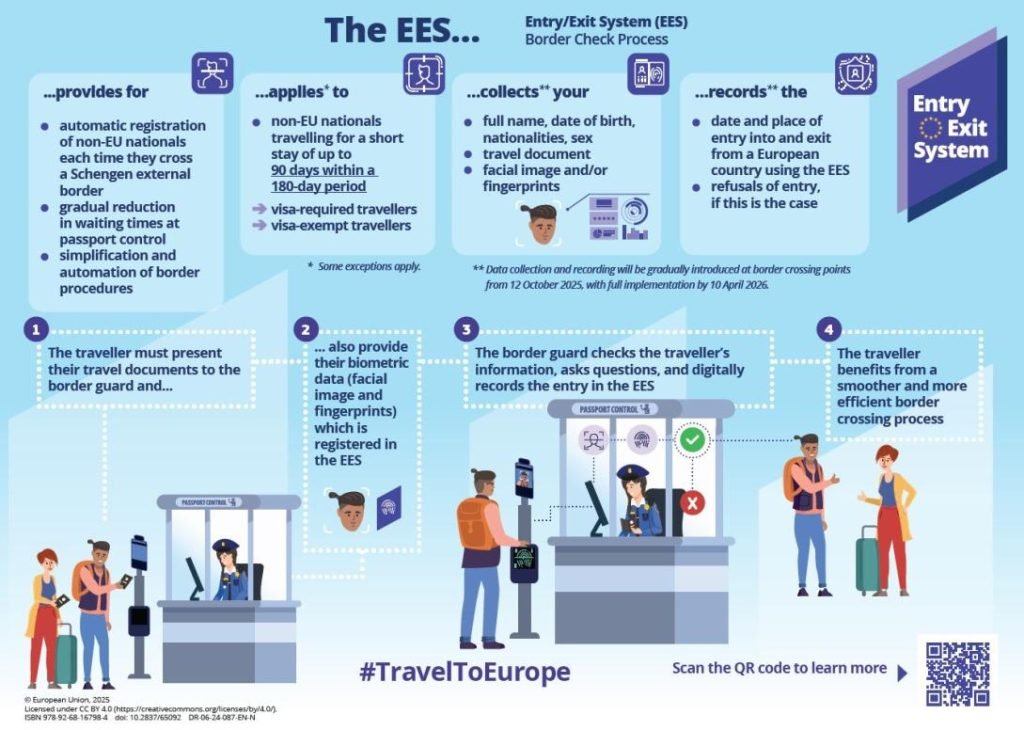
Image: European Commission – How the EES will work
🛰️ What Is the Entry/Exit System (EES)?
The Entry/Exit System (EES) is a new automated border management system that will replace passport stamps for non-EU travelers entering or leaving the Schengen Area.
Instead of manual passport stamping, the EES will record:
- Personal details
- Dates and locations of entry/exit
- Biometric data (fingerprints and facial image)
This digital registration will help track short-stay visits (e.g. 90 days in a 180-day period) and improve border security while simplifying checks for frequent travelers.

⚙️ What Does “Progressive Start” Mean?
The EU decided that the EES will not start all at once across every border. Instead, it will have a progressive (or phased) rollout, meaning different border points will activate the system at different times.
This gradual approach ensures:
- Technical readiness of border points
- Proper staff training
- Smooth transition without major disruptions
The rollout will begin in 12 October 2025, and full operation is expected by April 2026, according to the latest EU implementation roadmap.
🕒 Timeline: From Launch to Full Operation
| Phase | Expected Period | What Happens | Impact on Travelers |
|---|---|---|---|
| Initial Start | 12 October 2025 | First border points begin using the EES system | Some travelers will already have biometric data collected |
| Progressive Expansion | Oct 2025 – Apr 2026 | Gradual rollout across all external borders | Some borders still use passport stamps while others switch to digital |
| Full Operation | April 2026 | All Schengen external borders use EES | No more passport stamps; all entries and exits registered digitally |
During the transition, both systems — manual passport stamping and EES — will coexist at different border crossings.
✈️ What to Expect as a Traveler
Here’s what you need to know during the progressive start of EES:
1. Expect Slightly Longer Border Checks
Collecting biometric data (fingerprints + facial image) will take extra time, especially during your first entry under the new system.
2. Some Borders Still Use Passport Stamps
Not all airports and land borders will be equipped from day one. You might still get a traditional passport stamp in certain countries.
3. Your Biometric Data Will Be Registered Once
After your first EES registration, future crossings will be faster — your biometrics will already be stored for subsequent trips.
4. Double Nationals: Use the Right Passport
If you hold both an EU passport and a non-EU one, always travel with the EU passport to avoid unnecessary EES registration.
5. Overstays Will Be Detected Automatically
The EES will calculate how long you’ve been in the Schengen Area, making overstays immediately visible to border authorities.
6. Check if Your Border Is “EES Ready”
Before traveling, verify whether your airport or land border crossing already operates with the EES. Most EU airports will provide updates online.
📈 Why the EU Chose a Progressive Rollout
✅ Advantages
- Less risk of system failures during the early phase
- Gradual adaptation for border officers and travelers
- Opportunity to fix technical issues before full-scale deployment
⚠️ Challenges
- Different traveler experiences across Schengen countries
- Possible confusion if one border uses EES and another doesn’t
- Temporary delays during early implementation
Practical Tips for Smooth Travel During the EES Rollout
- Arrive earlier at airports (especially during the first months after October 2025)
- Keep your travel documents ready and cooperate during biometric capture
- Use e-gates where available — many will integrate EES quickly
- Stay updated via official EU travel websites before your trip
Final Thoughts
The progressive start of the EES marks the beginning of a new era in European border management — more secure, digital, and data-driven.
While it may cause some temporary delays at the start, it’s ultimately designed to make travel smoother and more efficient in the long run.
If you’re planning to travel or relocate to Europe under the Digital Nomad Visa, CarWay Migrate can help you navigate every step — from visa paperwork to compliance with new EU travel systems like EES and ETIAS.