
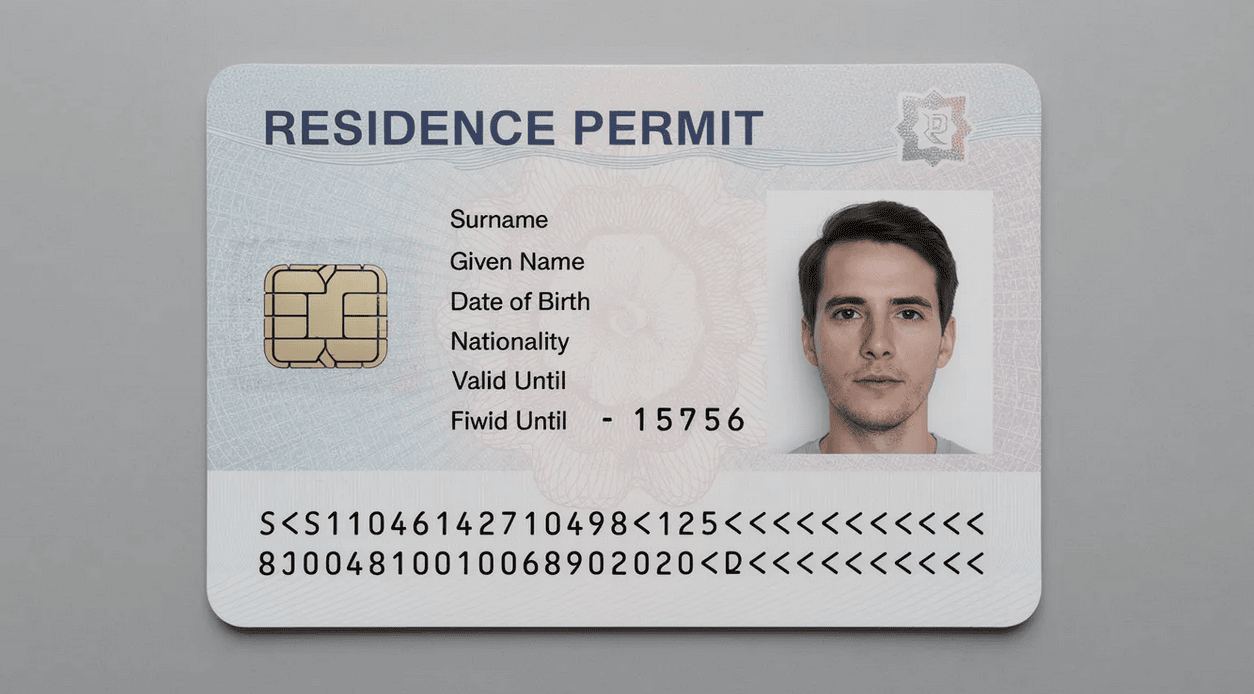

TIE Spanish. Key Takeaways
- The TIE (Tarjeta de Identidad de Extranjero) is Spain’s biometric physical card that proves legal residence for non-EU nationals and post-Brexit UK residents, carrying your NIE number, photo, fingerprints, and residence authorization type.
- UK nationals who arrived before 1 January 2021 should upgrade their old green certificate to a Brexit TIE for smoother banking, travel, and border crossings—especially before the EU Entry/Exit System (EES) becomes fully operational.
- UK citizens who moved to Spain before 1 January 2021 have rights under the Withdrawal Agreement, and the TIE card is the only valid residency document listed in the Withdrawal Agreement for UK citizens.
- UK citizens with a green residency certificate (sometimes called a ‘green card’) are encouraged to exchange it for a TIE card, but there is no deadline to do so.
- The TIE card is increasingly recognized as essential for proving residency in Spain post-Brexit.
- Most visa holders must apply for a TIE within 30 days of entering Spain or receiving residence approval; missing this deadline risks falling into irregular status even with a valid visa sticker.
- Required documents include the correct application form (EX-17, EX-20, or EX-23), Modelo 790-012 fee payment, padrón certificate, passport copies, biometric photo, and visa resolution—incomplete documentation means rebooking appointments several weeks later.
- Professional, English-speaking help in Spain can reduce errors and refusals by up to 70%, particularly valuable for families, pensioners, and those applying under the 2026 immigration amnesty.
What Is the TIE Card in Spain (and Why It Matters in 2026)?
The TIE, or Tarjeta de Identidad de Extranjero, is Spain’s official biometric residence card for any foreign citizen staying longer than 90 days. The TIE card Spain is a physical residency card that proves legal residence for non-Spanish nationals in Spain. Think of it as your foreigner identity card—a credit-card-sized plastic document embedded with a chip, your fingerprints, photo, and all essential residence details.
Your TIE card contains your NIE number (identification number), full name, type of residence authorization (student visa, non-lucrative, work visa, Brexit, etc.), and validity period. Depending on your permit category, this can range from one year for initial student permits to 10 years for long-term EU residence.
Since Brexit and Spain’s shift to biometric standards, Spanish authorities, banks, employers, health services, and traffic authorities increasingly insist on the TIE as the “gold standard” proof of residence. A visa sticker in your passport or an entry stamp simply isn’t enough to “exist” administratively in Spain for the long term.
By 2026, the TIE becomes even more central. Standard visa routes (digital nomad, work, non-lucrative) all require it, and the anticipated immigration amnesty will make TIE issuance essential for anyone regularizing their status. If you’re planning on living in Spain legally, this document is non-negotiable.
TIE vs NIE vs Green Certificate: Understanding the Three Key Documents
Many UK nationals and other foreigners mix up three different things: the NIE number, the TIE card, and the old EU green certificate. Let’s clear this up.
Here’s the breakdown:
- NIE (Número de Identidad de Extranjero) = A unique 9-character tax and foreigner identification number that never expires. You can have an NIE without being resident in Spain.
- TIE (Tarjeta de Identidad de Extranjero) = A biometric plastic card proving residence and often work rights. It always contains your NIE number printed on it.
- Green certificate = The older EU registration document (A4 or credit-card size), sometimes referred to as a ‘green card’, still valid for some UK and EU residents, but increasingly problematic with banks, borders, and Spanish government systems.
The practical difference matters. Opening a bank account in Madrid, registering with Seguridad Social in Valencia, or exchanging UK driving licences in Málaga typically goes 80-90% faster when you present a TIE instead of just green paper.
UK citizens who do not hold a residence certificate must register as residents and obtain a TIE card.
The NIE Number in Spain
The NIE is a 9-character code (letter–7 digits–letter, like X-1234567-Z) assigned to any foreigner interacting economically with Spain. Buying property, paying taxes, working, studying—all require this identification number.
EU citizens, non-EU nationals, and even non-residents buying a holiday home all use the NIE as their identifier. You obtain it via form EX-15 at a police station or Spanish consulate, and it never changes throughout your life.
Here’s what catches people out: the NIE alone does not grant you the right to live or work in Spain. It’s purely an identifier printed on other documents like the TIE, tax letters, and contracts.
Example: A British buyer in 2026 obtaining an NIE to purchase a flat in Alicante doesn’t automatically become a Spanish resident—they still need a visa and TIE to live there long-term.
The TIE Card as Biometric Residence Proof
The TIE is a physical card with chip, photo, and fingerprints—similar to modern national ID cards across the EU. It’s what airlines, Guardia Civil, banks, and employers recognize instantly as proof that you live in Spain legally. For those legally living in Spain, especially UK citizens post-Brexit, the TIE card is essential as it clearly demonstrates their residency rights.
Non-EU nationals on visas longer than 90 days must turn their visa approval into a TIE at a police station within 30 days of entry. This applies to:
- Non-lucrative residence visas
- Digital nomad visas
- Student visas (over 6 months)
- Work and highly-qualified professional visas
- Family reunification visas
UK nationals protected by the Withdrawal Agreement receive a special Brexit TIE stating “Artículo 50 TUE” or “Acuerdo de Retirada,” confirming their perpetual rights to reside and work.
The biometric element is crucial. With Spain’s integration into EU digital border systems like EES (fully operational by 2026), your TIE becomes machine-readable proof that separates you from tourists subject to the 90-day rule.
The Green EU Certificate (Old “Residency Card” Many Brits Still Hold)
The green A4 or credit-card-size EU registration certificate (Certificado de Registro de Ciudadano de la UE) was what many UK nationals obtained before 6 July 2020 as their original residency document.
Legally, this green certificate continues to confirm residence under the Withdrawal Agreement. But in practice? Banks, landlords, insurers, and some police officers trained to recognize biometric cards increasingly decline or question it.
Key problems with the green certificate:
- No photo (must be carried with passport)
- Fragile paper, easily damaged
- Not machine-readable for digital border systems
- Rejected by 40% more bank staff compared to TIE
Spanish government guidance strongly recommends—but doesn’t force—exchanging the green paper for a biometric TIE, especially before EES and ETIAS launch. Real-life cases of long-term British residents stopped at Schengen borders and asked for a TIE are becoming more common.
Who Needs a TIE in Spain in 2026?
Rules differ depending on whether you’re an EU/EFTA national, UK Withdrawal Agreement beneficiary, or non-EU visa holder. But in most cases, any stay in Spain beyond 90 days as a resident requires a residence document—usually a TIE for third country nationals.
Quick summary:
| Category | TIE Required? |
|---|---|
| Non-EU nationals on visas over 90 days | Yes, always |
| UK nationals arriving after 1 January 2021 | Yes (treated as non-EU) |
| UK nationals resident before 1 January 2021 | Green cert valid, but TIE strongly recommended |
| EU/EFTA nationals | Usually green cert, not TIE (unless non-EU family members) |
Important: Children, including babies born in Spain to foreign parents, must have their own TIE card or EU registration document. Parents’ cards are not enough.
Failing to obtain a TIE affects everyday life: problems registering at the local town hall (empadronamiento), accessing public healthcare, signing long-term rentals, or enrolling resident children at school.
Non-EU Visa Holders (Students, Workers, Digital Nomads, Non-Lucrative Residents)
All standard national visas (visado nacional tipo D) for stays over 90 days require a TIE once you arrive. This includes:
- Non-lucrative residence visas for retirees and financially independent applicants
- Digital nomad / remote worker visas
- Student visas for courses over 6 months
- Work visas and highly-qualified professional permits
- Family reunification visas
The visa sticker in your passport has a limited validity window (often 90 days) during which you must enter Spain and start the TIE process at the immigration office or police station in your province.
Without completing the TIE step, you risk falling into irregular status—even if the visa in your passport looked perfectly valid when issued.
Examples: A US student in Barcelona, an Argentinian self employed professional in Valencia, or a British digital nomad in Málaga all need their TIE within one month of entry.
UK Nationals Before and After 1 January 2021
The split is clear:
- Pre-2021 residents: Covered by the Withdrawal Agreement. Should hold either a green EU certificate or a Brexit TIE with Article 50 annotation.
- Post-2021 arrivals: Treated like other non-EU citizens. Must obtain a visa from a Spanish consulate (London, Manchester, Edinburgh) then apply for a TIE in Spain.
Spanish authorities, banks, and public bodies increasingly expect UK nationals to show a Brexit TIE rather than a green certificate—especially when dealing with EES, long-term residence applications (after 5 years), and family reunification.
Waiting until a problem appears (blocked bank account, denied boarding, or issues during the 2026 amnesty) makes upgrading more stressful than doing it proactively.
Family Members and Children
Non-EU family members of EU or UK Withdrawal Agreement residents—spouses, registered partners, dependent children, sometimes dependent parents—usually obtain residence as family members and must receive their own TIE.
Children born in Spain to foreign parents do not automatically become Spanish. Parents must register the birth and, if the child keeps the parents’ nationality, apply for a TIE as a family member.
Examples: British parent with an American spouse, French citizen with Moroccan children, or a pre-Brexit UK couple whose child was born in Barcelona in 2022—each family member needs their own document.
Each family member’s TIE has its own validity date and needs independent renewal. Plan appointments together where possible, but accept that Spanish systems may issue separate appointment dates.

How to Apply for a TIE in Spain: Step-by-Step Outline
The TIE card application process has three main stages: appointment booking, fingerprinting, and card production. To apply for a TIE card in Spain, you must submit your residence application to the immigration office in the province where you live.
The TIE process normally has three phases:
- Appointment booking (you must book an appointment online through the official appointment portal to apply for a TIE card)
- Police station appointment for fingerprints (toma de huellas)
- Card collection about 3–6 weeks later
The exact forms differ by situation:
- EX-17 or EX-23: Non-EU nationals with visas or authorizations
- EX-20: UK Withdrawal Agreement beneficiaries with no prior residence document
- EX-23: Exchanging green certificates to Brexit TIE
You will need to bring the following documents for all routes:
- Valid passport and copies
- Completed application form
- Proof of fee payment (Modelo 790, código 012)
- Recent biometric photo (white background, 32x26mm)
- Proof of address in Spain (empadronamiento, valid 3 months)
- Proof of underlying right (visa resolution, work contract, financial means)
Missing any single item from the following documents can lead to rejection at the window and needing to book a new tie appointment weeks later. This is why many applicants use local professionals or gestores.
Phase 1: Residence Authorisation or Visa Approval
For most non-EU nationals, the process begins outside Spain at a Spanish consulate (London, Manchester, Edinburgh, New York, Buenos Aires, Rabat) where you apply for a national visa based on your chosen route.
UK Withdrawal Agreement late applicants or those proving historic residence can start directly with the local foreigners office (Oficinas de Extranjería) in Spain using forms like EX-20, with documentary evidence of living in Spain before 1 January 2021.
This phase is where requirements differ most:
- Pensioners: Sufficient resources (around 400% IPREM) and private healthcare
- Workers: Work contract registered with Seguridad Social
- Students: Enrollment confirmation and insurance
- Self employed: Business registration and projected income
Once approval is granted, there’s usually a limited window (often one month) to either enter Spain or request the TIE appointment.
Phase 2: Booking and Attending the TIE Appointment (Toma de Huellas)
Book your appointment online (cita previa) via sede.administracionespublicas.gob.es. Select your province, choose procedure “TOMA DE HUELLA (Expedición de tarjeta)”, and enter your NIE/passport details.
Items to bring:
- Printed and signed EX-17 / EX-23 / EX-20 form
- Appointment confirmation printout
- Passport (original) and photocopies
- Visa sticker and/or approval resolution
- Recent biometric photo
- Padrón certificate (issued within 3 months)
- Proof of fee payment (tasa 790-012)
- Additional route-specific documentation
At the appointment: document check, fee receipt verification, fingerprints taken, signature captured, and delivery of a paper receipt (resguardo) with your NIE and file number.
In Madrid, Barcelona, and Valencia, 2024–2026 appointment availability can be scarce—slots are released at specific times and disappear quickly. The resguardo acts as provisional proof while waiting for the card.
Phase 3: Collecting Your TIE Card
Production time after fingerprints is normally 30–45 days, though this varies by province (longer in peak seasons). Check whether your police station requires a second cita previa or allows walk-in collection.
Items to bring for collection:
- Passport
- Original resguardo (receipt)
- Old card (if renewal or replacement)
The card shows the same expiry as your underlying residence permit. Check it carefully on collection—name spelling, date of birth, permit type—and request corrections promptly if errors appear.
Processing Times: How Long Does It Take to Get Your TIE?
Once you’ve completed your fingerprinting appointment at the immigration office or police station, the wait for your TIE card officially begins. In most parts of Spain, the standard processing time is between 3 and 6 weeks, but this can vary depending on the province and the current workload of the local authorities. Some applicants, especially in larger cities or during peak periods, may find themselves waiting several weeks longer.
UK nationals and other third country nationals should be prepared for possible delays, particularly if there’s a surge in applications or if additional documentation is requested by the Spanish authorities. To keep track of your application, you can check the status online using your NIE number or expediente number—this is especially useful if you’re anxious about timing or need to prove your legal status while waiting for your physical tie card.
It’s highly recommended to apply for your TIE as soon as possible after arriving in Spain or receiving your residence approval. Early action helps you avoid complications with banks, employers, or travel plans, and ensures you remain legally resident in the country. If your card takes longer than expected, don’t hesitate to contact the immigration office or police station where you had your appointment for updates or guidance.
Remember, processing times can fluctuate throughout the year, so plan ahead and allow for several weeks between your appointment and the collection of your TIE card. Staying proactive and informed will help you navigate the Spanish residency process smoothly, whether you’re a UK national or any other foreign citizen making Spain your new home.
Specific Documentation by Category (Pensioners, Non-Workers, Employees, Self-Employed)
While the TIE process itself is similar for everyone, the evidence required to prove status differs by economic situation. Many documents are checked at the immigration/consulate stage, but updated versions may be requested when issuing or renewing the TIE.
Keep Spanish bank statements, work contracts, autónomo registrations, and private health insurance current. Failing to maintain underlying conditions (dropping below financial thresholds, unpaid social security) can risk denial at renewal.
Pensioners and Retirees
Non-lucrative pensioner requirements typically include:
- Bank certificate from Spanish/EU bank showing minimum balance over 3 months
- Evidence of state or private pension income (S1 form for UK pensioners)
- Comprehensive private health coverage valid in Spain (no copays)
Using 2026 IPREM projections, consulates expect around 400% IPREM (~€28,800/year for singles, higher for couples). Police may spot-check that finances and healthcare remain intact at renewal.
Scenario: A British retiree moving to Alicante on a non-lucrative visa in 2025 must maintain savings and pension flow to renew and keep their TIE valid beyond year one.
Non-Working, Non-Pensioner Applicants
Non-lucrative residence also serves non pensioners (early retirees, those living off investments) who must show higher savings or passive income.
Consulates typically require:
- Bank certificates covering at least 3 months
- Evidence of regular passive income (dividends, rental, investments) or substantial savings
These applicants cannot work in Spain under non-lucrative routes. For renewal, authorities expect genuine residence in Spain—not using status as a simple “EU access card.”
Employed Residents
Employed residents need:
- Signed employment contract registered with Seguridad Social
- Recent vida laboral (working life report)
- Payslips proving sufficient monthly income (minimum wage or above)
Immigration approves contracts and salary before arrival, but TIE renewals verify employment remains active or has been replaced by another qualifying job within legal working hours requirements.
Register address changes, contract updates, and employer changes promptly to keep TIE data aligned with Seguridad Social records.
Self-Employed (Autónomos) and Business Owners
Self-employed TIE holders must show:
- Registration as autónomo (alta en RETA)
- Business registration if applicable
- Vida laboral confirming several weeks of contributions
- Tax declarations (modelo 130/131, VAT) and bank statements
Irregularities in tax filings or unpaid social security create problems when renewing or transitioning to long-term EU residence after 5 years.
Example: A British graphic designer registered as autónomo in Valencia needs quarterly tax and social security payments (minimum ~€300/month) up to date to avoid renewal issues in 2027.
Upgrading Green Certificates to a Brexit TIE (UK Nationals)
Thousands of British residents still rely on the old green paper, which remains legally valid but causes practical issues with banks, landlords, UK driving licences exchanges, and border controls.
Spain offers a dedicated upgrade path via form EX-23 at the police station in your province. There’s currently no formal deadline, but waiting until after digital border systems activate creates extra friction.
The new Brexit TIE explicitly states you’re a Withdrawal Agreement beneficiary, making it easier to prove status to live, work, and access healthcare long-term.
Who Should Prioritise the Upgrade?
Profiles benefiting most from early upgrade:
- Frequent travelers wanting smoother border crossings
- Those facing banking or mortgage procedures where staff insist on biometric cards
- Anyone planning long-term residence or citizenship applications
- Families with mixed nationalities where relatives already have TIE cards
Documents proving continuous residence (padrón history, work contracts, utility bills) may be requested in complex cases. Keep these records handy.
How the Green-to-TIE Exchange Works
Basic steps:
- Book cita previa at police station for Brexit/green certificate exchange
- Bring passport, original green certificate, EX-23, fee payment (Modelo 790-012), biometric photo, padrón
- Undergo fingerprints, photo validation, document check
- Collect Brexit TIE using resguardo and passport (few weeks later)
For straightforward cases, there’s no need to revisit the immigration office—police handle the exchange based on existing Withdrawal Agreement data. The new card typically has 5- or 10-year validity.

Validity, Renewal, and What Happens If You Lose Your TIE
The TIE isn’t a lifetime document. Short-term permits (students, initial visas) usually have 1- or 2-year cards, while long-term statuses reach 5 or 10 years.
Losing or damaging the TIE triggers a legal duty to report and request a duplicate within one month. An expired TIE causes complications at borders, banks, and traffic authorities—even if your residence status technically remains valid.
Diarize renewal dates at least 60–90 days before expiry, especially in busy provinces where appointment availability is limited.
Temporary vs Permanent / Long-Term TIE
Residents under 5 years typically hold temporary permits valid for shorter periods. After 5 years of continuous legal residence (with limited absences), many can apply for:
- Long-term residence (residencia de larga duración)
- Long-term EU residence
- For UK Withdrawal Agreement residents, upgraded permanent status cards
These long-term TIE cards offer 5- or 10-year validity, easier renewals, and better protection against unemployment or income drops. Proof of continuous residence includes padrón history, social security contributions, tax declarations, and rental contracts.
Renewing Your TIE Card
Start renewals 60 days before expiry or within 90 days after, depending on permit type. Apply via immigration office (often online with digital certificate) then book a new fingerprint appointment.
Renewals check whether conditions still apply:
- Non-lucrative residents: sufficient funds and healthcare
- Workers: active employment or new qualifying contracts
- Self employed: ongoing tax and social security payments
- Students: enrolled and attending
2026 amnesty applicants must be especially careful—missing renewal windows may mean losing newly acquired legal status.
Lost, Stolen or Damaged TIE Cards
If your TIE is lost or stolen:
- File a police report (denuncia) immediately
- Request duplicate at police station using EX-17/EX-23, passport, photo
- Pay replacement fee (Modelo 790-012)
The new card carries the same expiry date—replacement doesn’t extend validity. Avoid non-essential international travel until you receive the replacement card, as the denuncia and resguardo may be your only proof.
Why the TIE Card Is Essential for Everyday Life in Spain
Beyond immigration law, the TIE is now central identification document for banking, healthcare, work, driving, schooling, and public services. Carrying both passport and TIE is recommended, but for internal procedures the TIE alone often suffices.
People relying only on older documents (green certificates, paper NIE letters) face increasing administrative obstacles compared to valid TIE holders.
Banking and Property
Spanish banks must verify residence status for anti-money-laundering compliance. The TIE is the easiest way for non-EU nationals to prove this in 2026.
Opening accounts, requesting mortgages, investing, or updating personal details often requires biometric cards—green certificates are rejected by staff 40% more often.
When buying property, notaries and registries ask for TIE alongside NIE and tax information. Keeping a valid TIE avoids account freezes, repeated KYC checks, and transaction delays.
Travel Within and Outside the Schengen Area
Border guards rely on biometric residence cards to determine whether passengers are tourists (90/180-day rule) or legally resident in Spain.
UK nationals and non-EU residents with a TIE should present both passport and TIE when traveling to avoid unnecessary stamping. Once EES is fully active, the TIE becomes crucial to prevent confusion between short-stay visits and residence.
Airlines may require proof of residence when issuing boarding passes for one-way journeys into Spain from the UK or non-EU country. Always carry the physical card—don’t rely on phone photos.
Work, Social Security and Healthcare
Registering for Seguridad Social, getting a social security number, and signing work contracts require valid NIE and residence proof like a TIE.
Employers expect non-EU hires to show a TIE indicating work rights and may refuse to start payroll without it. Registering for public healthcare requires TIE, padrón, and often social security affiliation.
Keep TIE, social security documents, and health card together. Notify authorities of address changes to ensure continuous service access.
Driving Licence and Other Administrative Procedures
Exchanging a UK driving licence for a Spanish one requires proof of residence—the TIE is the standard identification document accepted by DGT.
Many other documents—vehicle registration, local taxes, school applications, rental contracts—are simpler with a valid TIE. Some town hall offices are reluctant to accept only green certificates for long-term processes.
By 2026, more regional services connect to online portals using NIE/TIE data for login, making an up-to-date card even more practical.
FAQ – TIE Spanish: Common Questions Answered
Do I need a TIE if I only stay in Spain for 3–4 months each year?
Tourists from visa-exempt country (UK, US, Canada, Australia) can stay up to 90 days in any 180-day period without a residence permit or TIE, provided they don’t work or become residents.
If you consistently spend 3–4 months but don’t cross the 90/180-day rule or become tax resident, you normally don’t need a TIE. However, if your lifestyle means living in Spain most of the year, working, or studying during your entire stay, apply for appropriate residence and a TIE rather than relying on repeated tourist entries.
Can I apply for a TIE directly in Spain without a prior visa?
In most cases, non-EU nationals must obtain a national visa in their home country before entering Spain to apply for a TIE. Exceptions exist for some family reunification routes, EU family member cards, or certain regularisation/amnesty scenarios.
UK nationals who moved after 1 January 2021 are generally treated like other non-EU citizens and cannot simply arrive as tourists and convert status. Avoid overstaying on tourist basis while attempting to “figure things out.
Is my green certificate still valid, or must I switch to a TIE immediately?
As of 2026, the green EU registration certificate for UK nationals resident before 1 January 2021 remains legally valid under the Withdrawal Agreement. However, Spanish authorities strongly recommend exchanging it for a Brexit TIE to avoid practical problems.
There’s no official deadline yet, but processing times and appointment delays mean you shouldn’t wait until a crisis occurs. Anyone experiencing frequent refusals should book an upgrade appointment immediately.
What happens if my TIE expires while I am outside Spain?
Consequences depend on how long you’ve been away and your underlying residence status. Short absences usually allow renewal, but being outside Spain for more than 6 or 12 consecutive months can jeopardise long-term residence rights.
Plan trips so renewals can be started before departure or shortly after return. Complex situations (TIE expired more than 90 days while abroad, long absences during first year) should be reviewed with an immigration professional.
Will the 2026 Spanish immigration amnesty automatically give me a TIE if I’m irregular now?
Any 2026 immigration amnesty will have specific conditions set by the Spanish government—proof of years of residence, clean criminal record, integration or work evidence—and won’t be automatic for everyone in irregular status.
If approved under the amnesty, you’ll receive residence authorization that must then be turned into a TIE at the police station following the same fingerprint and card-issue steps. Start organizing the following documents now—such as padrón history, school records, employment documents, and any necessary translations or legalizations—to prepare for the process. Having the following documents ready will help ensure a smoother application when the time comes. Follow official BOE publications rather than social media rumours, and seek professional advice when final conditions are announced.
Conclusion: Your Next Steps for TIE Success in Spain
Securing your TIE card is a vital milestone for UK nationals and all foreign citizens aiming to live in Spain legally. To set yourself up for success, start by gathering all required documents—such as your valid passport, proof of address, and evidence of income or employment—well before your appointment. Booking your slot at the immigration office or police station in advance is crucial, as appointment availability can be limited, especially in popular regions.
Consider enlisting the help of a professional, like a lawyer or gestor, to guide you through the process and double-check your paperwork. This extra support can make a significant difference, reducing the risk of delays or refusals and ensuring your application meets all the latest requirements set by Spanish authorities.
Once you receive your tie card, always keep it with you, along with your passport and other identification documents. You may be asked to prove your legal status at any time, whether you’re opening a bank account, signing a rental contract, or accessing healthcare. Staying organized and proactive will help you remain legally resident and enjoy all the benefits of living in Spain.
By following these steps—preparing your documents, booking your appointment, and seeking expert advice—you’ll be well on your way to a smooth TIE application process. Stay informed about any changes in Spanish immigration rules, and don’t hesitate to reach out for help if you need it. With the right preparation, you can confidently navigate the system and fully embrace your new life as a legally resident foreign citizen in Spain.