
Key Takeaways
- Spanish citizenship by descent enables many descendants of Spaniards to obtain a full EU passport without prior residency in Spain, granting access to live, work, and travel freely across all 27 countries of the European Union.
- Two legal frameworks govern descent claims in 2026: nacionalidad de origen under the Spanish Civil Code (permanent) and the Democratic Memory Law (Ley de Memoria Democrática), which accepted applications until October 2025 with processing continuing into 2026.
- UK and US citizens can typically retain their British passport or American nationality when acquiring Spanish citizenship through descent routes, as these are treated as Spanish of origin rather than naturalisation.
- Eligibility depends on proving a Spanish parent or grandparent (sometimes great-grandparent through chain applications), with documentary evidence of uninterrupted Spanish nationality and, where applicable, exile or emigration history.
- This guide addresses how UK and US readers can evaluate qualification, gather required documents, navigate consular procedures, and understand realistic timelines and costs for the entire process.
Introduction: What Is Spanish Citizenship by Descent?
Spanish citizenship by descent—known as citizenship through jus sanguinis—allows you to acquire Spanish nationality because your parents or grandparents were Spanish. Unlike obtaining spanish citizenship through lengthy residency requirements, descent-based claims can often be processed entirely from abroad at Spanish Consulates in London, Manchester, Edinburgh, New York, Los Angeles, Miami, Chicago, and other locations.
A successful application grants you a full Spanish passport—and therefore an EU passport—with rights to live, work, and study across 27 EU member states plus associated Schengen privileges. For British nationals navigating post-Brexit restrictions, this represents a significant opportunity to restore European mobility. For US citizens, it opens doors that would otherwise require years of legal residence.
Spain has recently expanded opportunities for descendants of exiled Spaniards through the Democratic Memory Law, which allowed applications until October 2025, with processing continuing well into 2026. The following sections explain who qualifies, how the law operates in 2026, what documents you need, and how the process differs for British versus American families.
Who Qualifies for Spanish Citizenship by Descent?
Eligibility for Spanish citizenship by descent depends heavily on your specific family circumstances—the year your ancestor was born, whether they naturalised British or American, and whether they left Spain as exiles or economic migrants.
Children of Spanish citizens have the most straightforward path. If at least one parent held Spanish nationality at the time of your birth, you typically qualify as a spanish citizen of origin, even if born in the UK or US. Registration can occur at any age via the consular spanish civil registry, though timing requirements vary based on whether your parent was born in Spain or abroad.
Grandchildren of Spaniards often qualify under the Democratic Memory Law if their Spanish grandparent emigrated or was exiled between 18 July 1936 and 31 December 1978. This includes descendants of those who fled during the Spanish Civil War and Franco dictatorship, settling in Britain, the US, Latin American countries, or elsewhere.
Great-grandchildren face a more indirect path. Spanish law does not generally grant nationality directly through a great-grandparent. However, if your parent could have claimed Spanish nationality but never did, you may be able to establish a chain—first securing nationality for your parent, then claiming through them.
Typical disqualifiers include:
- An ancestor who formally renounced Spanish nationality before having children
- Loss of spanish nationality through prolonged foreign residence without declaration (under older laws)
- Lack of documentary proof connecting generations
Eligibility is very fact-specific. For example, a grandparent naturalising as a US citizen in 1950 after a parent’s 1945 birth means that parent was born Spanish, potentially enabling your claim. The timing of foreign naturalisation versus birth dates often determines everything.
Legal Framework in 2026: Civil Code & Democratic Memory Law
Two legal pillars govern Spanish citizenship by descent in 2026: the Spanish Civil Code (Código Civil) and the Democratic Memory Law (Ley 20/2022).
The Spanish Civil Code
Article 17 of the spanish civil code defines who qualifies as “Spanish of origin” (españoles de origen). This includes:
- Children born to a Spanish father or mother
- Those born in Spain to foreign parents who were themselves born in Spain
- Individuals in specific territorial circumstances
This origin status is highly secure and transmissible to descendants abroad without the loss risks that affect naturalised citizens. Article 20 provides “option” rights for adult children (generally up to age 20, extended in certain circumstances) whose father or mother was originally Spanish, allowing claims even decades later.
The Democratic Memory Law
The Democratic Memory Law, enacted 19 October 2022 and effective from 21 October 2022, created a time-limited window addressing historical injustices. It specifically targeted:
- Descendants of exiles from the Spanish Civil War and Franco regime (1936-1978)
- Children of spanish women who lost nationality through gender-discriminatory laws upon marrying foreign nationals
The original three-year application window ran until 21 October 2025. Applications submitted before this deadline continue to be processed into 2026 and beyond. These routes are processed via Spanish Consulates abroad and do not require previous legal residence in Spain.
Main Categories of Descent-Based Eligibility
Understanding which category applies to your situation is essential before gathering documents or booking consular appointments.
Category 1: Children of Spanish Citizens of Origin
If at least one parent was Spanish at your birth, you qualify for nationality of spanish origin. Whether your parent resides in Spain or abroad, the path remains straightforward. If your parent was born abroad, registration must typically precede your 21st birthday to preserve automatic rights; otherwise, a discretionary option route applies.
Category 2: Adult Children of Spaniards Who Recovered Nationality
If a parent recently recovered or acquired Spanish nationality (for example, through the Democratic Memory Law), you may then apply by option within a fixed period—often two years from the parent’s acquisition date.
Category 3: Grandchildren of Spanish Exiles (Democratic Memory Law)
Many whose grandparent fled Spain between 18 July 1936 and 31 December 1978 qualified under this law, provided they could demonstrate the exile connection through refugee papers, passenger manifests, or arrival documentation in Mexico, the UK, US, Argentina, or other destinations.
Category 4: Children of Spanish Women Who Lost Nationality Upon Marriage
Historic discrimination required Spanish women to take their husband’s nationality upon marrying a foreign citizen. The Democratic Memory Law corrected this injustice, enabling descendants in Britain, the US, and Commonwealth nations to claim through their maternal line.
Category 5: Other Special Cases
Less common but significant categories include:
- Adopted children of spanish nationals
- Foundlings born on spanish territory
- Individuals whose Spanish nationality was lost as minors and now wish to recover it
Spain allows dual citizenship primarily for nationals from Ibero-American countries, Equatorial Guinea, the Philippines, and Portugal, who can retain their original nationality when obtaining Spanish citizenship. Additionally, Sephardic Jews can apply for dual citizenship in Spain without renouncing their original nationality, provided they can prove their ancestry linked to the Jewish diaspora from Spain, demonstrating their sephardic origin.
Evidence You Need: Proving Your Spanish Ancestry
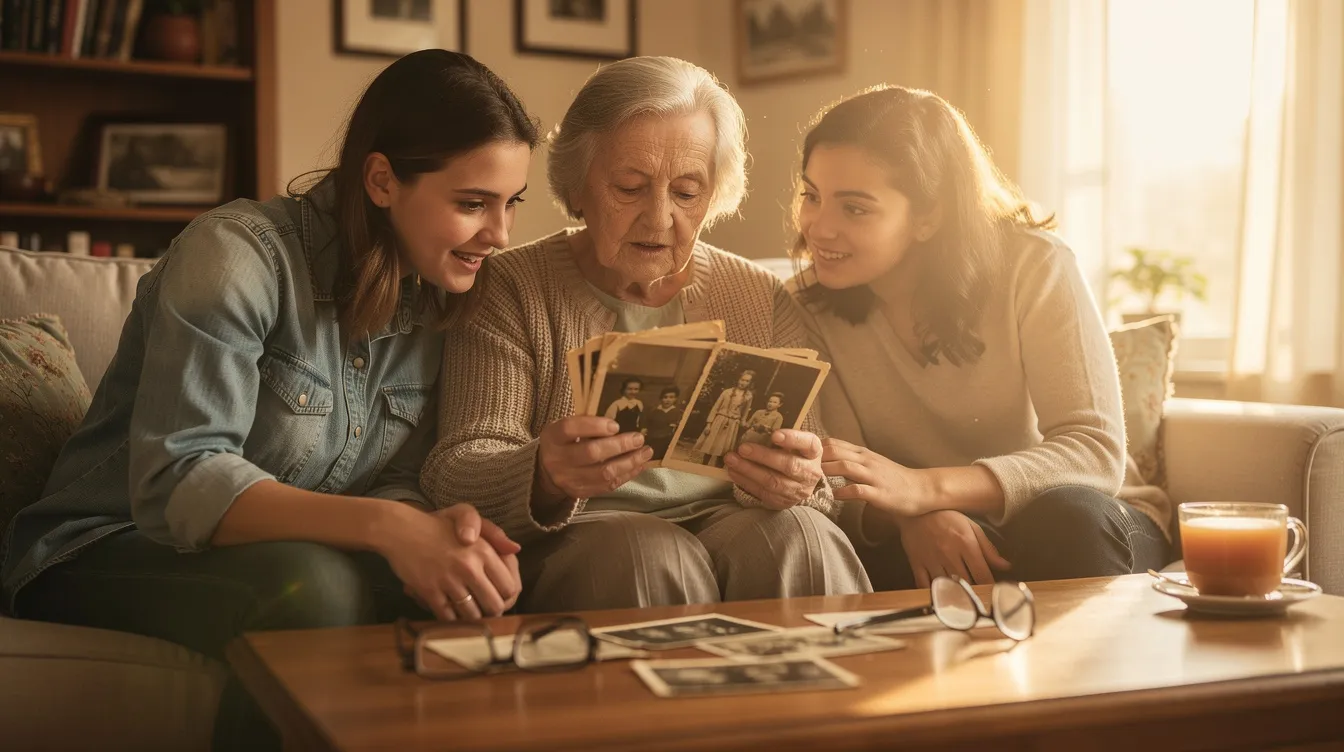
Documentation requirements for Spanish citizenship by descent are precise and unforgiving. Each application must typically provide a “paper trail” of legalized and apostilled birth, marriage, and death certificates across multiple generations. Proving an “uninterrupted link” through multiple generations is crucial for a successful application.
Spanish Records
- Literal birth certificates (certificación literal de nacimiento) of your Spanish ancestor from the Registro Civil or consular registrations abroad
- Parish and baptismal records for births prior to civil registry establishment (around 1870s), particularly from regions like Galicia, Asturias, Andalusia, and Castilla
- Access these through the online Ministerio de Justicia portals where possible
UK Records
- General Register Office (GRO) full birth certificate, marriage certificates, and death certificates
- Home Office naturalisation certificates showing if and when ancestors became British
- Apostilles obtained through the Foreign, Commonwealth & Development Office (£35-£75 per document)
US Records
- State vital records offices for birth, marriage, and death certificates
- USCIS N-565 forms or historical naturalisation records pinpointing dates
- Apostilles from the relevant Secretary of State (typically £10-£20)
Exile and Emigration Evidence
- Ship passenger lists from ports like Bilbao, Santander, or Barcelona
- Ellis Island manifests (freely searchable online)
- UK Board of Trade records for departures
- Refugee cards and Mexican aviso de llegada stamps
- Employment records abroad dating from 1936-1978
Critical Requirements
To apply for Spanish citizenship by descent, applicants must provide:
- A birth certificate
- A valid passport
- Any necessary documentation proving lineage
All non-Spanish documents must be legalized with the Apostille of The Hague and translated into Spanish by an official translator (traductor jurado). Documentation should generally be issued within the last 3-6 months.
Common challenges include name discrepancies across generations—for example, García anglicised to Garcia—which may require judicial rectification or sworn affidavits.
Step-by-Step: How to Apply from the UK or US
UK and US applicants typically apply through their nearest Spanish Consulate rather than travelling to Spain. Each Consulate publishes its own appointment system and document checklist.
Step 1: Confirm Your Eligibility
Determine whether your case falls under the Civil Code (timeless provisions) or the Democratic Memory Law (deadline-sensitive). Pay particular attention to birth dates and nationality status of parents and grandparents, as these often determine which route applies.
Step 2: Book a Consular Appointment
Secure an appointment through the online booking platforms of your designated Consulate:
- UK: London (3-6 month waits typical), Manchester, Edinburgh (often shorter waits)
- US: New York, Miami (4-8 months amid backlogs), Los Angeles, Chicago, Houston, San Francisco
Step 3: Gather and Legalise Documents
Obtain UK apostilles via the Foreign, Commonwealth & Development Office. US apostilles come from the Secretary of State in each relevant jurisdiction. Arrange sworn translations into Spanish by traductores jurados (typically £50-£150 per document).
Step 4: Complete Official Forms
Standard forms include the Solicitud de nacionalidad and registration forms for the Registro Civil Consular. Many forms require signature in front of a consular officer. A criminal record certificate may be required depending on your age and circumstances.
Step 5: Submit in Person
Most Consulates require personal attendance with originals and copies of all foreign documents. Minors are typically accompanied by parents. You can submit your application for dual citizenship online using the Spanish government’s SEDE electrónica or in person at a civil registry, depending on your consulate’s procedures.
Step 6: Await Resolution
The Ministry of Justice in Spain has a maximum of 1 year to issue a response regarding dual citizenship applications, although the actual processing time can vary. Applicants using Democratic Memory Law citizenship services may find that specialist support helps reduce errors and delays in complex exile-based files. Recent changes have reduced the average waiting time for dual citizenship applications in Spain to around 5-6 months, with some applicants receiving decisions even faster. If a dual citizenship application is not processed within 12 months, it may be considered refused due to administrative inaction, allowing the applicant to file an appeal.
Step 7: Oath of Allegiance and Registration
Once your application for dual citizenship is accepted, you will receive notification from the Spanish authorities and have approximately six months to complete the formalities that confirm your status as a dual national. This involves swearing allegiance to the King and Constitution of Spain, registration in the spanish civil register, then applying for your DNI (national ID card) and spanish passport.
Do You Need to Live in Spain? Residency & Dual Nationality Issues
Applicants for Spanish citizenship through descent are often not required to live in Spain before applying, in contrast to standard naturalization processes. This is a fundamental distinction between descent-based claims and citizenship by legal residency (which typically requires 10 years for most foreign nationals, reduced to 2 years for citizens of ibero american countries, former spanish colony nations, and spanish speaking countries).
No Residency Required
UK and US applicants using descent routes typically become spanish citizens without any minimum stay in Spain. You may need to visit Spain later to obtain your DNI and formalise certain registrations, but legal residence is not a prerequisite for the application itself. Citizenship by descent allows individuals with Spanish ancestry to obtain dual citizenship without the need for residency, making it easier for them to reconnect with their heritage.
Dual Nationality Considerations
Spain treats most descent cases as “Spanish of origin,” a status harder to lose than naturalised citizenship. Both UK and US law permit holding multiple citizenships. British citizens can retain their british passport, and those holding a valid passport from the US face no domestic penalty for acquiring spanish dual citizenship.
The Renunciation Question
Descent-based routes usually do not require a formal declaration renouncing British or US nationality. This contrasts with residency-based naturalisations for non treaty countries, where Spain generally requires renunciation. Individuals from countries without a dual nationality agreements with Spain, such as the United States, are generally required to renounce their original nationality to obtain Spanish citizenship through residency routes, although practical exceptions exist for descent claims where you retain both their original nationality and new Spanish status.
Tax Implications
Simply acquiring spanish nationality does not automatically make you a Spanish tax resident. Tax residence depends on days spent in Spain (generally 183+ days annually), centre of economic interests, and family location. Holding dual citizenship in Spain allows individuals to live, work, and travel freely across all the countries of the European Union, significantly enhancing mobility and opportunities. Dual citizenship can also provide access to social services and benefits in both countries simultaneously, including healthcare, education, and social security. Professional tax advice is prudent before relocating.
Timelines, Costs, and Practical Considerations
Understanding realistic timeframes and expenses helps you plan effectively for obtaining spanish nationality through descent.
Timelines
| Phase | Typical Duration |
|---|---|
| Document gathering and legalisation | 2-4 months |
| Securing consular appointment | 3-6 months |
| Decision from Ministry of Justice | 6-18 months |
| Oath and passport issuance | 1-2 months |
| Total | 12-30 months |
Official Fees
The cost of applying for Spanish citizenship can range from €60 to €100, depending on the specific application and processing fees. Spanish passport fees typically run €30-€40, converted and charged in GBP or USD at Consulates. The nationality application itself is often free under descent routes.
Ancillary Costs
Applicants may incur additional fees for certificates and documentation required to complete their citizenship application, which are separate from the initial application fee. These include:
- UK apostilles: £35-£75 per document
- US apostilles: £10-£20 per document
- Sworn translations: £50-£150 per document
- Courier and postage costs
- Legal or advisory fees (expert immigration lawyers often charge £1000-£3000 for complex exile cases)
In total, the expenses associated with obtaining spanish nationality can add up to around €1000 when considering all items and subcosts involved in the application process.
Travel Costs
UK applicants may need to travel to London, Manchester, or Edinburgh. US applicants might fly or drive to their designated Consulate at least once for application and once more for passport collection. Budget £200-£1000 depending on location.
Common Delays
- Incomplete documentation (30-40% initial rejection rate per consular reports)
- Name discrepancies across generations (affecting roughly 20% of cases)
- Archival delays for Spanish historical records (2-4 months)
- Backlogs at high-volume Consulates serving large Spanish-descent communities
Maintaining and Passing On Your Spanish Citizenship
Once acquired, Spanish citizenship requires attention to maintain properly and transmit to future generations.
Spanish of Origin Status
Those acquiring citizenship through descent hold “Spanish of origin” status, which is preferable to naturalised status for transmitting nationality to children born abroad. This status is immune to loss through non-use abroad following 1990s reforms.
Registering Children’s Births
Children of spanish nationals should have their births registered at the local Spanish Consulate (inscripción de nacimiento) promptly after birth. This preserves their rights and simplifies future passport applications.
Retention Declarations
Adults born abroad to Spanish parents may need to declare their wish to retain spanish nationality before certain age thresholds (traditionally within three years after reaching majority, around age 21-24). Keeping consular registrations current prevents complications.
Dual Obligations
- Military service: Currently suspended in Spain
- Voting: Spanish nationals residing abroad may participate in spanish elections through consular absentee mechanisms
- Civic duties: Minimal practical obligations for those living outside Spain
Long-Term Planning
Keep copies of all Spanish documents, maintain valid Spanish passports, register address changes with your Consulate, and ensure your legal status remains clear for future generations. This prevents the documentation challenges many descendants face today when attempting to establish their preferred nationality.

Frequently Asked Questions about Spanish Citizenship by Descent
Can I choose between using my UK/US nationality or my Spanish nationality when in Spain?
Spain expects its nationals to enter and leave spanish territory using a Spanish passport and considers them Spanish for all legal purposes while in Spain. The UK and US will generally treat you as British or American when in their territory, regardless of your Spanish citizenship. As a dual citizen, you should be aware of this “one country, one nationality” principle when travelling. Keep your spain passport and your original passport both valid to avoid practical difficulties at borders when moving between countries.
Do I need to pass Spanish language or culture exams for citizenship by descent?
To apply for dual citizenship in Spain through residency, you must gather all required documents and prepare your citizenship file, which includes passing two exams: the DELE (language proficiency exam demonstrating the official language competency) and the CCSE (Spanish knowledge and cultural exam). However, these exams are generally not required for citizenship of origin or Democratic Memory Law descent cases. Most applicants by descent are exempt, though consular instructions vary. Even when exams are not mandatory, acquiring Spanish language skills benefits practical life in Spain and integration into Spanish society.
My Spanish grandparent became British/US citizen before my parent was born. Do I still qualify?
If your grandparent voluntarily acquired British or US nationality and thereby lost Spanish nationality before your parent’s birth, your parent might not have been born to a spanish national. The Democratic Memory Law may still assist if the naturalisation formed part of an exile story linked to political or ideological reasons during the Civil War or Franco regime. Carefully review the date of foreign naturalisation versus your parent’s birth date—this timing often determines whether you can obtain dual citizenship.
What happens if the Democratic Memory Law window closes before I apply?
The legal application deadline was 21 October 2025. New filings under the Democratic Memory Law are no longer accepted after this date. However, applications submitted in time continue to be processed into 2026 and beyond. Other Civil Code-based routes—including option rights for children of current Spaniards—are not time-limited in the same nationality way and remain available.
Can I apply for Spanish citizenship by descent if my only Spanish ancestor is a great-grandparent?
Spanish law does not generally grant nationality directly through a great-grandparent. The usual transmission chain runs parent → child → grandchild. However, if your parent could have claimed Spanish nationality but never did, it may be possible to first secure nationality for that parent, then apply for yourself—a “chain” application. Cases relying solely on great-grandparental Spanish nationality are complex and require detailed analysis by an immigration lawyer familiar with dates, registrations, and the Democratic Memory Law provisions.