


If your TIE has expired, your renewal is still pending, and you have a flight booked, one missing document can ruin the trip. This guide explains qué es la autorizacion de regreso, when it matters, what to bring, and how CarWay Migrate helps clients plan safe travel while their immigration file is still moving.
Key Takeaways
- La autorizacion de regreso lets a foreigner with a TIE expired, under renewal, duplicated, or not yet issued leave Spain and return, usually within a maximum of 90 days.
- It is requested through Policía Nacional, comisaría de policía, or la oficina de Extranjería, depending on the province.
- It is linked to your current autorización de residencia or de estancia, not to nationality.
- Passport, EX-13, tasa 790-012, proof of renewal, and timing are critical to avoid denied boarding or refused entry.
- CarWay Migrate can manage the process online and align your trip with your wider immigration strategy en españa.
What is the autorizacion de regreso and who needs it?
In Spain’s immigration practice, la autorizacion de regreso is a temporary document for los extranjeros who cannot prove their right to return with a valid tarjeta de identidad de extranjero. Under Article 5 of Royal Decree 1155/2024, that approves the updated immigration regulation sobre derechos of foreign nationals, it allows a foreign citizen whose identity card is in the process of renewal to leave Spain and return within a maximum of 90 days.
It is not a visa, nationality document, or new residence permit. It is tied to de la autorización de residencia or de estancia already granted or being renewed: student status, arraigo, long-term residence, family permit, or estancias por estudios, among others. It is issued para el viaje de ida y vuelta mientras el expediente sigue en trámite.
Typical applicants include:
- Someone in trámite de renovación with la tarjeta expired.
- Someone who lost or had de la tarjeta stolen and has requested a duplicate.
- A person waiting for first tarjeta de identidad after a visa.
- A student renewing an autorización de estancia.
- A person with a favorable arraigo, reagrupación, or family EU resolution but no physical TIE yet.
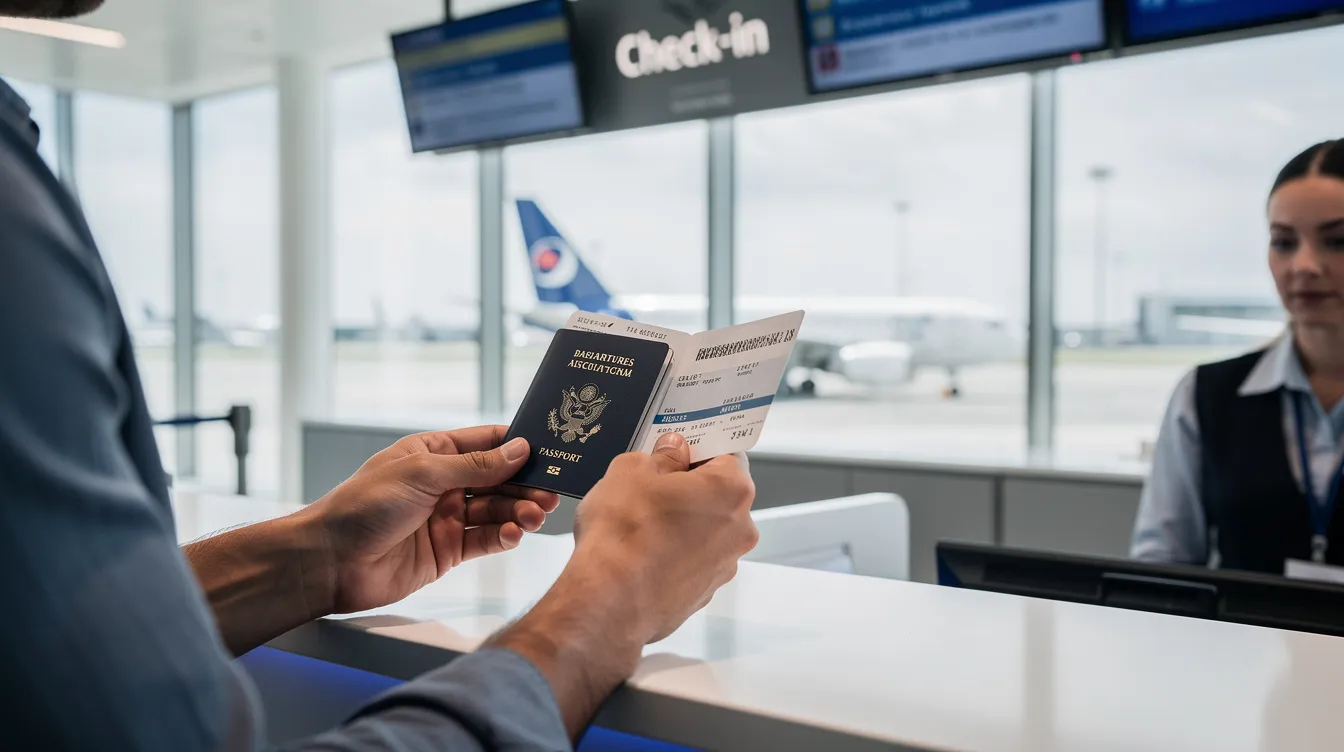
This document is especially important at airports. Traveling without a return authorization can lead to being denied boarding by airlines, as they may not recognize the validity of your residency status without the proper documentation.
When you do and do not need an autorización de regreso
Not everyone with a TIE needs this document. The practical question is cuando se debe solicitar: you need it when your right to re-enter Spain cannot be clearly proven with passport and TIE en vigor.
You normally need una autorización de regreso when:
- You travel with tarjeta de residencia caducada, but la renovación was filed on time.
- You have requested a duplicate after theft, loss, or destruction.
- Your first TIE appointment is pending after an approved visa.
- You have favorable residence approval but not the card.
- Your student renewal or prórroga de estancia is still en trámite.
You usually do not need it if:
- Passport and TIE are both valid.
- You are not leaving Spain.
- You travel only inside Schengen with valid documents.
- You make short internal movements within Spain.
A return authorization cannot be granted to individuals who are subject to a prohibition of exit from Spain or restrictions on their freedom of movement imposed by judicial authorities. It may also be refused en caso de extradition proceedings or serious public order/security concerns, reflecting de policía and judicial control.
Typical cases and practical examples
Concrete cases are easier than abstract rules.
Renewal filed on time. A foreigner with a two-year residencia has a TIE expiring on 10 January 2026. They filed de renovación in December 2025 and want to fly outside Schengen in March. They need la autorización because the expired TIE plus resguardo may not be enough at boarding or en el Spanish border.
Loss or theft of TIE in Spain. A long-term resident in Madrid has the TIE stolen. They file a police report, request a duplicate, and then need to travel. The file should include the denuncia, duplicate request, passport, EX-13, and la tasa paid.
First TIE after visa. A non-lucrative visa holder enters Spain, has a fingerprint cita scheduled, but must travel home urgently. The authorization can be requested if there is proof of favorable approval and proof of filing para la tarjeta.
Student renewal. An Erasmus or master’s student renewing de estancia status wants to attend an academic trip abroad. The return permit links the student’s pending extension to permission to leave y volver.
- Family cases, such as reagrupación familiar or familiar de ciudadano de la UE, can also require regreso if the resolution exists but de la tarjeta is not issued.
Requirements and documents: checklist for 2026
Requirements vary slightly by province, but the core documents are stable. To apply for a return authorization in Spain, individuals must present the original and a copy de un pasaporte, proof of residence, and the application form EX-13.
Bring:
- Original passport, ideally valid at least six months, plus copia del pasaporte and, if requested, pasaporte completo.
- Current or expired TIE, tarjeta de residencia caducada, or previous tarjeta de identidad de extranjero.
- EX-13 modelo oficial, completed in Spanish and signed, with the correct reason: renovación, duplicate, first card, etc.
- Proof of the main immigration process: resguardo de presentación de la renovación as part of the core checklist, resolución favorable, cita de huellas, duplicate request, or proof de la solicitud.
- Billete de viaje as part of the standard required file, with documents showing why el viaje responde to urgency or need.
- Denuncia, en su caso, for loss or theft.
- Impreso de tasa pagada.
Los requisitos para solicitar una autorización de regreso incluyen un pasaporte original, la tarjeta de residencia caducada y la constancia de la renovación, un billete de viaje y un impreso de tasa pagada. Some offices may also request empadronamiento, means of support, or proof de su continuity in Spain.
La tasa is usually Modelo 790-012, downloaded from the Policía Nacional fee portal, selecting the epígrafe for autorización de regreso. Fees must ser abonadas con anterioridad, and y el receipt must be brought to the appointment. In exceptional identity cases, a título de viaje, cédula de inscripción, or prórroga del título may be relevant, but only if applicable.
Organize la documentación in original y copia, en la carpeta o expediente que se presenta en la cita. Lo importante es that, en el momento de la cita, the officer can quickly verify who el extranjero is, what status is pending, and why la solicitud is justified.
How and where to apply (cita previa and offices)
The procedure depends on your province. The application for a return authorization can be submitted at the police station or the immigration office, depending on the procedures established in the applicant’s province, and in some provinces it is handled en la comisaría while in others it is handled in the immigration office.
La solicitud debe realizarse a través de la sede electrónica, where you must first request an appointment, then complete the prior steps to pay the fees, and prepare the required documents for submission. In the Policía Nacional procedure page, choose your province and look for “POLICIA – AUTORIZACIÓN DE REGRESO” or a similar option.
In some areas, the trámite de la solicitud is centralized in de extranjería instead of police, and the option may appear under “Extranjería – Autorizaciones,” por lo que the exact office and workflow depend on local practice. In Madrid, Barcelona, and other large cities, cita previa can be scarce; it is recommended to schedule the appointment for the return authorization at least three weeks in advance due to high demand, especially during peak travel seasons.
Common mistakes include choosing the wrong province, not printing the appointment confirmation, not bringing la tasa paid, or forgetting the expediente de los permisos in trámite. If no appointments appear, check several times per day, try nearby localidades in the same province, and, in extreme urgency, approach a comisaría de policía to explain the case, without assuming guaranteed attention.
CarWay Migrate helps clients identify the right office, prepare all documents, and time the appointment around booked flights.

Fees, processing time, and validity
The authorization is low-cost but time-sensitive. As of 2026, the typical tasa 790-012 amount for de la autorización is €10.72, although it may be reviewed annually by Ministerio del Interior, so always verify the current amount before payment.
Payment may be made through the official form and bank, or online where available. Bring the paid receipt; without it, the appointment may fail.
Processing is often same day at many comisarías if everything is correct. In some offices, it may take 1–7 days, especially if the file is reviewed by la oficina de Extranjería.
Validity rules matter:
- If requested before expiry de la autorización de residencia or de estancia, it tendrá una vigencia of up to 90 days from that expiry date.
- If requested after expiry, but with the renewal admitted, it is usually valid up to 90 days from the grant date.
- If se solicita con incomplete evidence, the office may require correction or deny it.
The return authorization is valid for a maximum of 90 days from the date of issuance, allowing the holder to re-enter Spain within this period. During that window, official rules under Article 5 of RD 1155/2024 indicate no limitation on entries and exits, but practical advice is to use it for the planned trip and avoid complex itineraries.
If you travel without the necessary return authorization, you risk being stranded outside of Spain, as re-entry may be denied if your authorization has expired or is not in order. In cases where a return authorization is required, failing to obtain it before traveling can complicate your ability to return to Spain, potentially affecting future residency applications.
Travel scenarios: Schengen, airlines and borders
There is a difference between what Spanish immigration law allows and what airline check-in staff accept. Foreigners must apply for a return authorization if they cannot prove their right to re-enter Spain with a valid TIE, such as when it is expired or under renewal.
If you fly from Spain directly to a non-Schengen country and back to Spain, carry passport, autorización de regreso, proof de residencia or renewal, and travel documents. At boarding, the airline may ask for evidence that you can return to Spain.
The return authorization is not valid for travel to other Schengen countries; it is strictly for the journey between Spain and the foreigner’s country of destination. It is meant for travel between Spain and that non-Schengen destination, not for transit entry through another Schengen state. It is specifically for individuals whose residence permit is in the process of renewal or is expired, and it is not valid for travel to other Schengen countries.
That is why direct return to Spain matters: the risk is que el control fronterizo de otro Estado Schengen may not accept the document. Some officers may not recognize a Spanish national document as proof of entry, so direct flights to Spain are safer when possible.
Layovers outside Schengen, such as the UK, Turkey, or Gulf hubs, can also trigger stricter airline checks. Minors and family members need separate review: if a child has a different nationality, different card status, or surname differences, carry birth certificates, family documents, and, where needed, their own regreso.
Carry copies of resolutions, empadronamiento, proof of studies/work, and evidence of ties to Spain. Avoid trips close to or beyond 90 days, especially if you are in nationalidad, arraigo, or long-term residence planning.
Impact on nationality, residence continuity and other procedures
La autorización de regreso is attached to your residence or stay, not directly to a nationalidad española file. Still, long or frequent absences can affect future applications, renewals, larga duración, and citizenship evidence.
The 90-days-in-180 Schengen short-stay rule may matter if your underlying permit fails and you must rely on visa-free entry. More importantly, residence continuity may be questioned if you spend too much time outside Spain, even with a valid regreso.
If nationality is granted while you are abroad, you may return and complete the oath, DNI, and passport steps, provided your residence continuity is maintained and your status remains valid. But caso de que the main authorization is denied while abroad, the legal base for the regreso can collapse.
CarWay Migrate reviews travel plans as part of immigration and tax residence strategy, especially for digital nomads, remote workers, investors, and families managing travel in and out of Spain.

How CarWay Migrate can help you
CarWay Migrate is a digital-first immigration law firm for Spain, helping clients worldwide manage residency, renewals, and travel risk online.
For autorización de regreso, we can help with:
- Eligibility assessment before you book non-refundable flights.
- Review of your autorización de residencia or autorización de estancia.
- EX-13 preparation and document checklist adapted to your province.
- Guidance on tasa 790-012 and payment proof.
- Coordination between flights, citas de policía nacional, and trámites de extranjería.
We also advise on non-lucrative visa Spain, digital nomad visa Spain, student visas, family EU/Spanish member permits, arraigo, renewals, Beckham Law, and tax residence planning.
If you are unsure whether you need una autorización de, send us your current expediente de extranjería for a quick online review.
FAQ about autorización de regreso (Spain)
These FAQs address practical doubts not fully covered above.
Can I travel if my renewal is still “en trámite” and I only have the receipt?
The resguardo alone is often not enough to re-enter Spain by air, especially from outside Schengen. Airlines usually want a clear authorization, not only proof that a renewal was filed. The safest option is la autorización de regreso, linking the receipt to formal permission to return for up to 90 days. Do not rely only on informal stories from friends; your route and airline matter.
What happens if my residence renewal is denied while I am abroad with an autorización de regreso?
The regreso depends on a valid or pending residence basis. If the underlying permit is denied while you are abroad, border control may refuse entry or allow only a short stay if your nationality qualifies under Schengen rules. Monitor your expediente online and through legal counsel while abroad. Critical travel should be scheduled only when denial risk is low or an appeal plan is ready.
Can I use the autorización de regreso to enter through another Schengen country first?
No, you should not plan that route if you can avoid it. The autorización de regreso is a Spanish national document, not a Schengen visa. Some Schengen officers may not treat it as sufficient proof of entry, causing delays or refusal. Land first in Spain whenever possible.
Does the autorización de regreso allow me to work while it is valid?
No. The authorization only allows exit from Spain and re-entry into Spain. Work rights come from the underlying autorización de residencia y trabajo, student status, or other permit. If your previous residence allowed work, work may usually continue during renewal under Spanish immigration rules, but each permit type should be checked.
How early before my trip should I apply for the autorización de regreso?
Start preparing 4–6 weeks before travel. In 2026, cita previa demand is high, so at least 2–3 weeks’ margin is sensible. Some police stations issue regreso only close to the travel date, so timing must respect local practice. Before buying non-refundable tickets, confirm that the main renewal and regreso process can be aligned.